How Much Does Siding Replacement Cost in Cincinnati?
What actually drives the price of new siding in Cincinnati — materials, home size, tear-off, trim and the questions to ask before you sign.
Read the guide →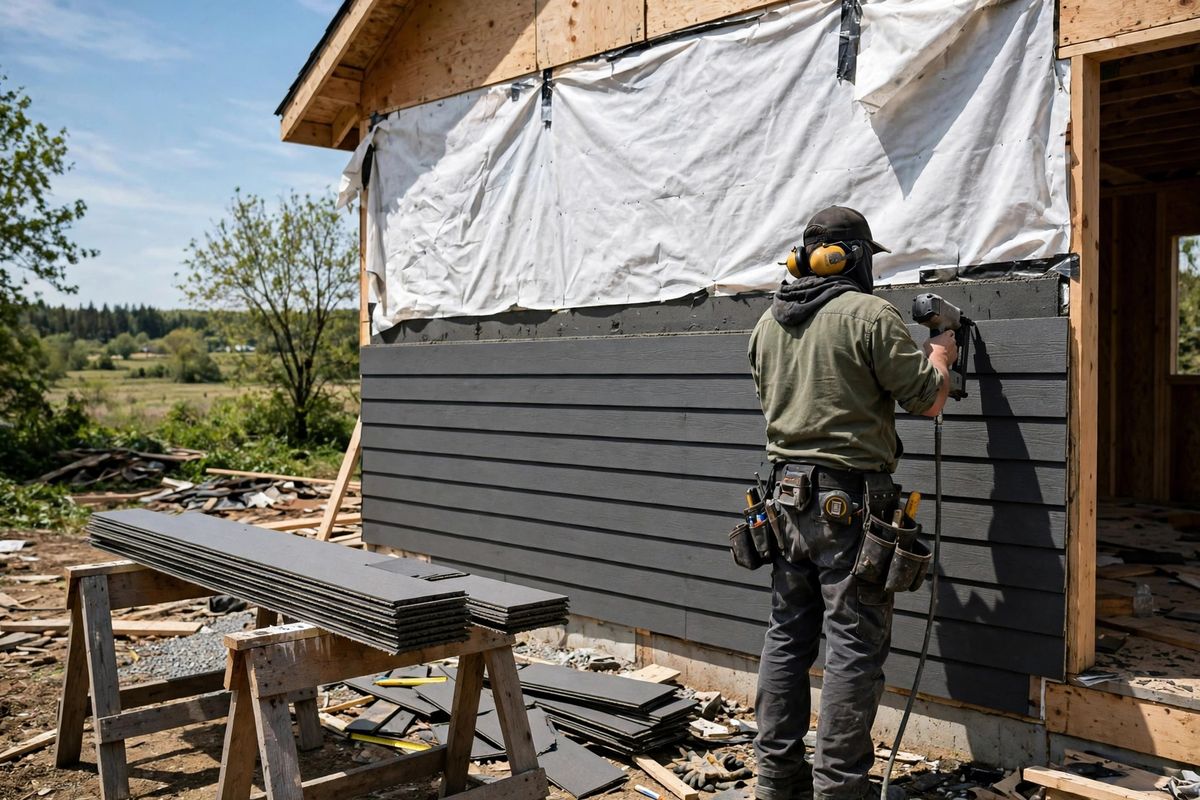
Homeowners shop for the panel they can see, but siding performance is decided by the layers they cannot. House wrap, flashing, insulation and the drainage gap behind the panels determine whether a wall stays dry and comfortable or quietly rots. When you replace siding, you get one rare chance to fix those hidden layers for the next several decades. This guide explains each layer in plain terms, what insulated siding actually adds, and the questions that reveal whether a provider takes the hidden half seriously.
House wrap (weather-resistive barrier) sits on the sheathing under the siding. It sheds water that gets behind the panels while letting water vapor escape from inside the wall. It only works when it is lapped correctly — upper courses over lower ones, like shingles — and sealed or taped at seams and penetrations. Old homes may have no wrap at all, or felt paper that has torn and degraded, which is a common discovery during tear-off.
Flashing is the metal or membrane that directs water at interruptions — window and door heads, deck ledgers, roof-to-wall intersections and horizontal trim. Most siding 'leaks' are actually flashing failures. Kick-out flashing where a roof edge meets a wall is small, cheap and frequently missing, and its absence can funnel roof water into the wall for years. Any siding quote should describe flashing renewal explicitly.
Insulated vinyl siding has foam backing bonded to the panel. It stiffens the panel, reduces the hollow sound of vinyl, smooths the wall line over minor irregularities, and adds modest insulation value while reducing thermal bridging at studs. It is not a substitute for wall-cavity insulation, but on an older Cincinnati home with uninsulated walls it is a noticeable comfort improvement — especially combined with new wrap and sealed penetrations.
Ask what wrap will be installed and how seams and windows are detailed. Ask whether flashing is replaced or reused, and whether a drainage gap or rain-screen detail is included on vulnerable walls. Ask what happens if sheathing is found rotted. A provider who answers these clearly — and puts them in the written scope — is treating your wall as a system, not a surface.
Cincinnati's climate shapes every siding decision on this page. Humid Ohio River valley summers encourage mildew on shaded walls, spring brings the storm season that tests fasteners and flashing, and winter freeze-thaw cycles exploit any gap that admitted water in the fall. Local providers see the results of all three every week, which is why Cincinnati-specific advice matters more than generic national guidance: details that are optional in a dry climate — kick-out flashing, sealed penetrations, correct clearances at grade — are the difference between a wall that lasts and a wall that quietly rots here.
For the core services behind this guide, start with our siding services in Cincinnati overview, compare siding replacement with siding repair, or go straight to siding contractor in Cincinnati, OH on the homepage.
Almost every siding question eventually becomes this one. As a working rule, localized problems — a damaged section, one failing elevation, a single material issue — repair well and economically. Widespread problems — damage or rot on most elevations, recurring leaks at multiple details, materials at the end of their service life — usually make replacement the better spend, because money poured into patching a failing system buys little time. The honest way to decide is with a documented inspection that maps the damage elevation by elevation, prices both paths, and lets the evidence make the argument. Beware any recommendation, in either direction, that arrives before someone has actually looked behind a panel.

What actually drives the price of new siding in Cincinnati — materials, home size, tear-off, trim and the questions to ask before you sign.
Read the guide →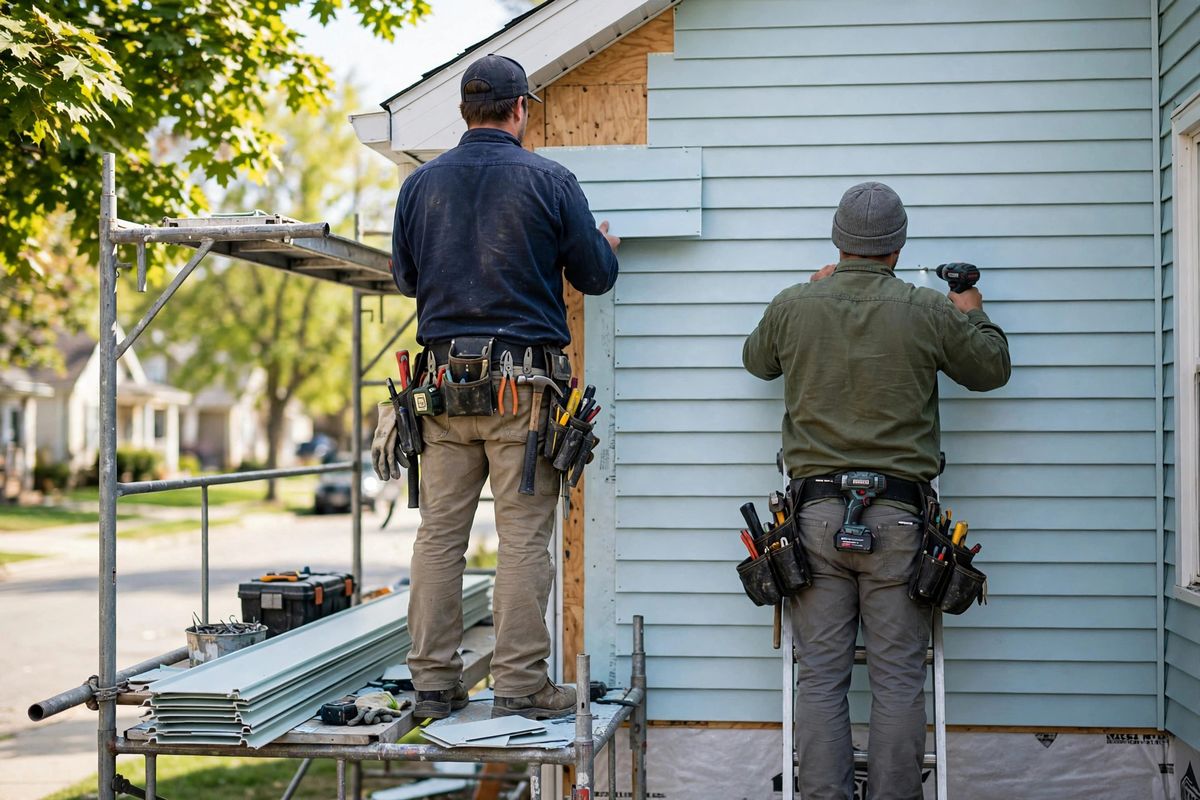
From first call to final walkthrough — the phases of a Cincinnati siding job, typical durations for each, and the delays that actually happen.
Read the guide →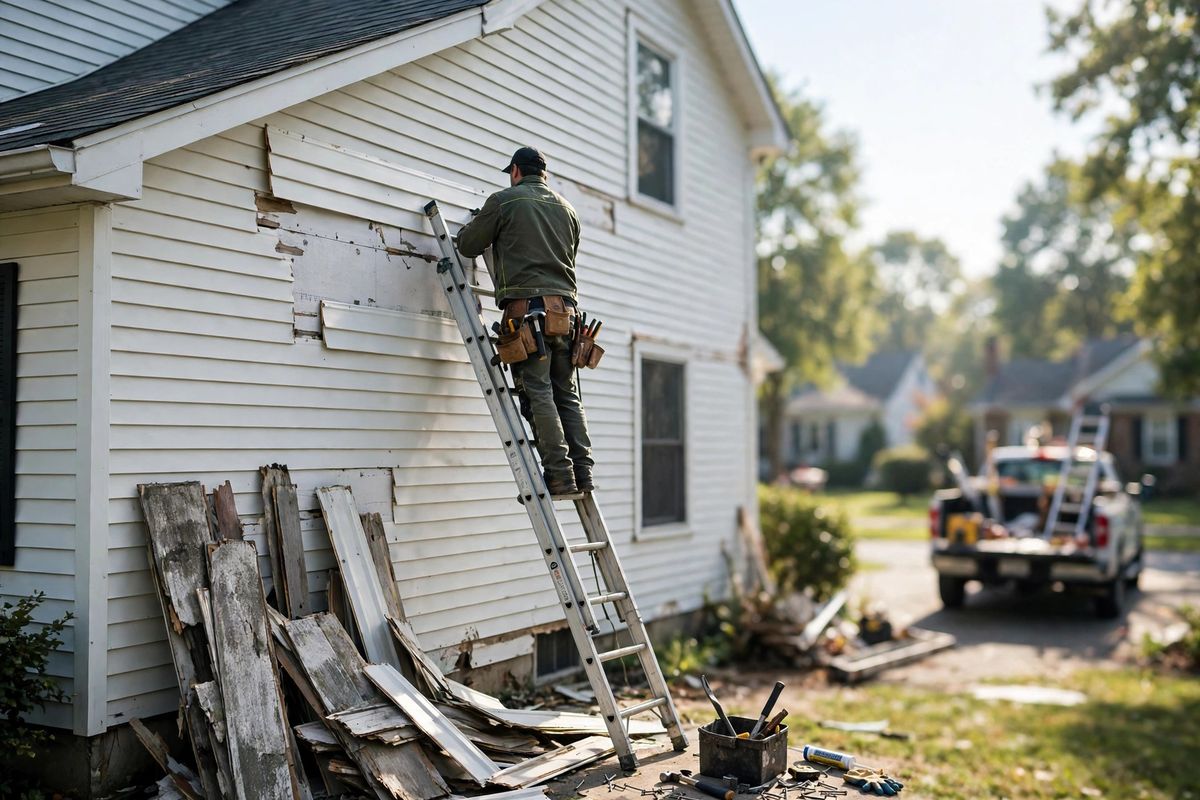
Hairline vs. structural cracks, moisture testing behind stucco, patch repair, re-coating and when full replacement with another siding makes sense.
Read the guide → Cincinnati Siding Pros
Call Cincinnati Siding Pros now and we'll connect you with an independent local siding provider in Cincinnati, OH — no pressure, no obligation. Lines are open 24/7.
 Scan to call now